
Invisalign vs. Braces: Which Orthodontic Treatment Is Right for You?
A confident
smile plays a big role in both personal and professional life. Thanks to modern
orthodontics, straightening your teeth is now more comfortable and discreet
than ever. Two of the most popular options are traditional braces and Invisalign.
But which one is the right choice for you? Let’s compare them in detail.
What Are Traditional Braces?
Traditional
braces consist of metal or ceramic brackets that are attached to the teeth and
connected with wires. Over time, these wires are adjusted to gradually move the
teeth into their proper positions.
Pros of
Braces:
- Effective for complex
orthodontic cases
- No need to worry about
forgetting to wear them
- Often more affordable than
Invisalign
Cons of
Braces:
- Highly visible, especially
metal braces
- Can cause discomfort after
adjustments
- Food restrictions (sticky,
hard, or chewy foods)
- More challenging oral hygiene
What Is Invisalign?
Invisalign
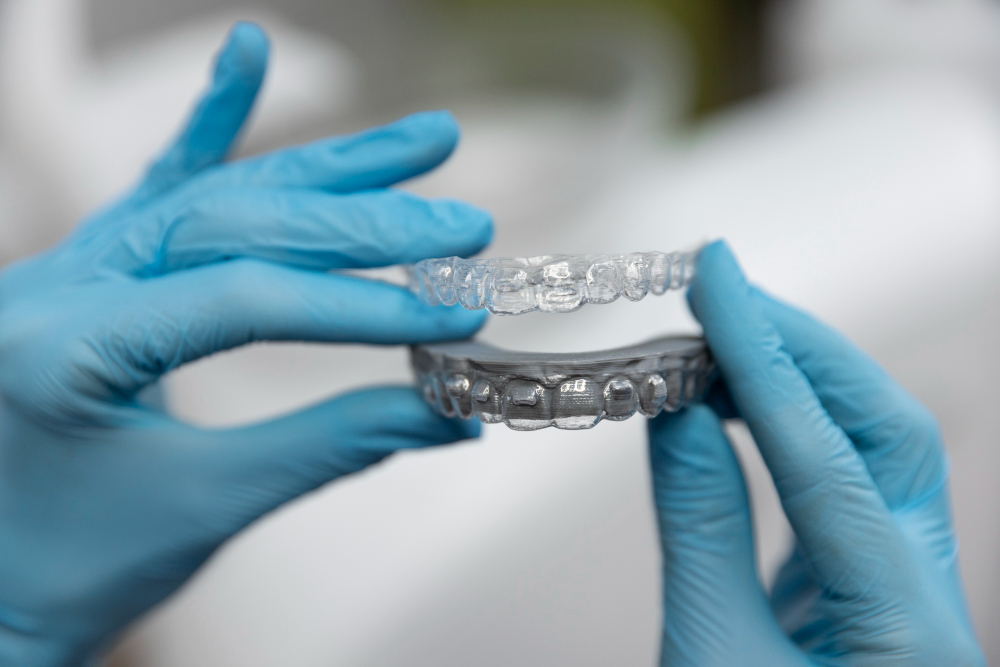
is a modern orthodontic treatment that uses a series of clear, removable
aligners to straighten teeth. Each set of aligners is worn for about one to
two weeks before moving on to the next one.
Pros of
Invisalign:
- Nearly invisible appearance
- Removable for eating and
cleaning
- More comfortable with no metal brackets
or wires
- No food restrictions
Cons of
Invisalign:
- Requires discipline to wear
aligners 20–22 hours a day
- May not be suitable for very
complex cases
- Usually more expensive than
braces
Invisalign vs. Braces: Key Differences
|
Feature |
Invisalign |
Braces |
|
Visibility |
Almost
invisible |
Highly
visible |
|
Comfort |
Smooth and
comfortable |
Can
irritate gums and cheeks |
|
Removability |
Removable |
Fixed |
|
Oral
Hygiene |
Easy to
maintain |
More
difficult |
|
Treatment
Time |
Similar or
sometimes shorter |
Effective
but may take longer |
Which One Should You Choose?
The choice
between Invisalign and braces depends on several factors, including:
- The complexity of your dental
issues
- Your lifestyle and daily habits
- Aesthetic concerns
- Budget
If you want
a discreet and flexible treatment option and can commit to wearing aligners
consistently, Invisalign may be ideal for you. On the other hand, if you have a
more complex orthodontic case or prefer a fixed solution, traditional braces
might be the better choice.
Are you ready to modernize your clinic?
Join over 500 international clinics that use Medvouch to make their patient cycle more efficient.